


New dawn for Nairobi hockey following landmark NCHA elections
.jpg)




Reading Time: 6min | Fri. 28.11.25. | 12:15
The new team inherits a county that is vibrant, competitive, and crucial to the national hockey ecosystem but one grappling with issues of governance, lack of a county league, financial instability and over-reliance on deteriorating facilities
A new era began for Nairobi hockey on Saturday, 22 November as the Nairobi County Hockey Association (NCHA) ushered in fresh leadership after conducting its long-awaited elections at Parklands Sports Club with Rose Wasike the Sports Registrar present.
The county, home to 42 teams out of the total 76 teams that compete in the various Kenya Hockey Union (KHU) leagues - now turns to its newly elected president, Peter Njoroge Nyambura, to guide Kenyan hockey’s most influential region into a new phase of growth, reform and accountability.
Follow our WhatsApp channel for more news
The elections produced a youthful but experienced team expected to overhaul the systems that have long hindered the game’s expansion.
The new team inherits a county that is vibrant, competitive, and crucial to the national hockey ecosystem but one grappling with issues of governance, lack of a county league, financial instability and over-reliance on deteriorating facilities.
In his first interview since assuming office, Njoroge spoke to Mozzart Sport about his plans, the challenges ahead, and why Nairobi must reclaim its historic position as Kenya’s hockey powerhouse.
Balancing the National and County Calendar
With Nairobi hosting the majority of clubs in the leagues, Njoroge believes the association must rethink how it structures its own activities to avoid clashing with KHU programmes.
“With the number of teams within Nairobi, whatever we do affects the national league,” says Njoroge. “We need to sit down with KHU and strategize on how the two can coexist without causing friction.”
Njoroge insists the discussion on realignment will happen soon, but he prefers not to commit to specifics until the two sides jointly explore how county competitions, training needs and club commitments can run harmoniously.
For years, Nairobi has been considered the heartbeat of Kenyan hockey. Yet, while the county boasts the highest number of clubs and some of the finest players, its league structures have struggled compared to other regions.
Njoroge cites Mombasa County whose league and tournaments have grown steadily as a benchmark Nairobi can learn from.
“With the number of teams we have, we should be running a better league,” he notes. “It should be straightforward, but we must address a few factors, including team registration and funding.”
To avoid starting cold, NCHA plans to kick off with two or three tournaments as they build financial capacity for a fully sponsored county league.
Short-Term, Medium-Term, Long-Term Vision
Njoroge breaks his roadmap into three phases:
The short term and immediate vision include establishing clear policy and operational processes for the new office, organizing tournaments to keep players active and maintain momentum, avoiding long periods without competitive activity.
“We don’t want the county to go dormant. Let’s get players on the pitch as we structure the office,” says Njoroge.

The medium-term vision which he sees being implemented next season include launching a full Nairobi County Hockey League, complementing the national league with competitions that create more playing time and talent exposure.
“We need something beyond the National League. That’s a no-brainer,” asserts Njoroge.
The Long-term vision is to have an annual recurrence of tournaments and league competitions, structured school and university partnerships to revive traditional hockey giants such as Nairobi School and Lenana School, solidifying a development pathway linking junior players to club players.
Njoroge envisions a model similar to the Wazalendo Hockey Club-Highway partnership, where clubs support schools with coaching expertise while schools provide facilities and early-stage talent.
Rebuilding Hockey from Schools and Universities
A major pillar of Njoroge’s plan is revitalizing school hockey - an area Nairobi once dominated. Many iconic schools have faded from national radar due to limited coaching, lack of structured competitions, and insufficient support.
“If I play in the league and I’m a defender, and I meet a high school defender, there’s so much I can teach them,” he explains. “We want to pair schools with clubs and bring them back to the level they used to be.”
This model aims to ensure that colleges and universities continue participating consistently while high schools gain technical support and mentorship.
Governance, Transparency, and Accountability
Governance reforms sit at the heart of Njoroge’s agenda.
Drawing from the success of Friday Night Lights - a tournament he helped organize, Njoroge emphasizes transparency in financial reporting and decision-making.
“We want to be able to say, ‘We raised two million,’ and account for every shilling,” he says. “That’s key to sponsorship. That’s key to good leadership.”
To institutionalise accountability, every executive member will sign “performance contracts” outlining their targets for six months and one year. These contracts will be shared openly with members.
NCHA will also introduce regular town hall meetings, whose frequency will be determined (monthly, quarterly, or after each tournament). Players, coaches, managers and stakeholders will be free to interrogate decisions, raise concerns, or offer ideas.
“How else do we know we’re performing if we don’t put ourselves out there?” Njoroge questions.
Sponsorship Strategy: Making Hockey Affordable Again
Funding remains one of the biggest challenges for hockey teams. Njoroge hopes the county’s proximity and centrality will help reduce costs and attract sponsors.
The ultimate dream is a fully sponsored league with prize money, equipment support and incentives for clubs.
“We want teams to get something back for the investment they put in,” he says.
Inspired by sponsorship models seen in golf where corporates support individual athletes, Njoroge plans to explore similar partnerships for hockey players and clubs.
However, he stresses that sponsors require proof of value, and NCHA must show clear returns on investment through digital content, fan engagement and exposure.
Unpredictable fixtures have long frustrated Nairobi teams. Njoroge promises a shift toward predictability and digital transparency.
“I’ve not been a fan of getting fixtures one or two weeks before matchday,” he states. “We want fixtures generated online so clubs can plan ahead.”
Even when dates need adjustments, he prefers rescheduling over surprises.
Officiating will also undergo significant reform with the establishment of a Nairobi umpires’ association, focusing on referee welfare, training and progression.
The county hopes to align officiating systems with national structures while maintaining autonomy for local competitions.
Rethinking Surfaces and Facilities
City Park Stadium’s deterioration has left Nairobi hockey without a reliable high-quality pitch. While a long-term solution is required, Njoroge says immediate steps will involve evaluating other available surfaces like University of Nairobi, Strathmore University, schools’ and club grounds with playable surfaces
He believes home-and-away concepts could be adopted if pitches are verified as safe and up to standard.
The conversation around a new county-based pitch whether Turf, Murram, or other options will be explored later through feasibility studies and consultations.
Njoroge and his team take office at a time when Nairobi’s hockey identity stands at a crossroads. The county possesses unmatched numbers, history, talent and potential but also longstanding structural issues.
His leadership promises transparency, sustainable development, rejuvenated school hockey, revamped competitions, improved governance and stronger partnerships with KHU.
For the first time in years, Nairobi hockey stakeholders feel a renewed sense of direction.
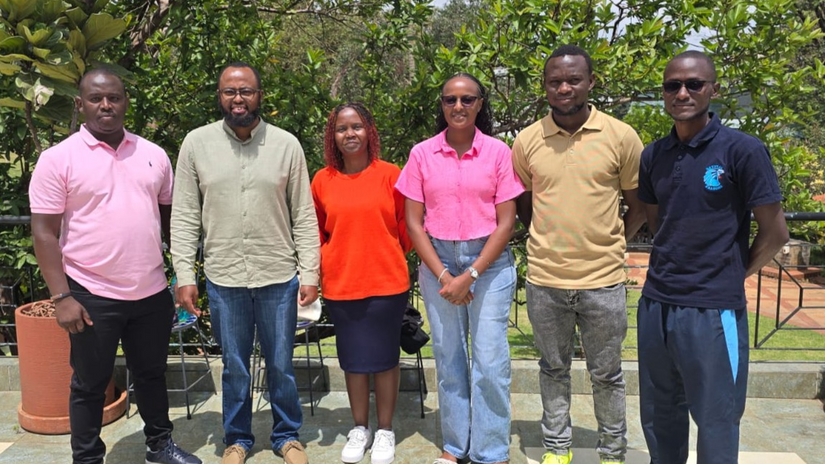
The full list of elected officials includes:
President: Peter Njoroge Nyambura
Deputy President (Male): Duncan Simiyu
Deputy President (Female): Lucy Wangechi
Secretary General: Clayson Mudoga Luvanda, Deputy Secretary General: Jedida Zawadi Gathenge,
Treasurer: James Juma
Deputy Treasurer: Audrey Omaido Amoh
Match Secretary: Sandra Nyambura Ann Kariuki
Assistant Match Secretary: John Bosco Mutuku Kisimbii
Member: Ian Orunga